Friday, January 18, 2019

Diazonium Salt and It's Reaction

Reactions of Diazonium Salts: Sandmeyer and Related Reactions

by  Nand kishor gupta

Formation of Diazonium Salts From Aromatic Amines

Today let’s talk about a set of reactions of aromatic amines, that variously are catalogued under “amines” and “aromatic compounds”, depending on the textbook.
It involves converting an aromatic amine (NH2) into a tremendously good leaving group (N2) which can then be replaced by various nucleophiles. However, N2 is such a good leaving group that the method only works well for aromatic amines; alkyl (“aliphatic”) amines tend to lose N2 too rapidly, making the method much less useful in that case.
Here’s the process. Treatment of an aromatic amine with nitrous acid (or sodium nitrite, which is converted to nitrous acid in the presence of acid) in the presence of a strong acid like HCl results in the loss of H2O and the formation of a new N-N triple bond. The resulting species is called a “diazonium ion”:
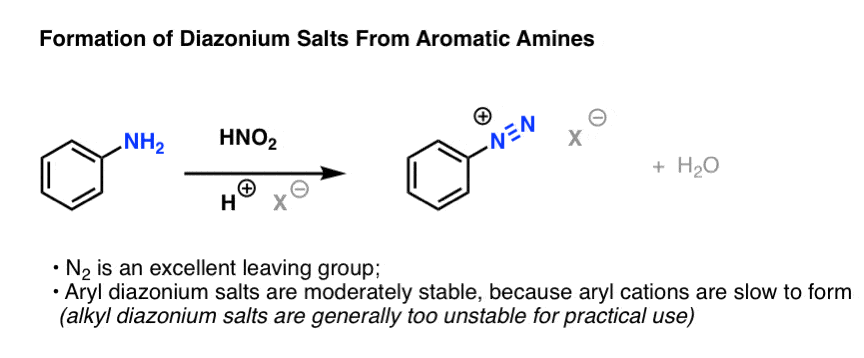
(How does it work? We’ll go through the mechanism at the bottom of the post).

Reactions of Diazonium Salts

So why does it matter?
It matters because the resulting diazonium salts can be transformed into all kinds of useful functional groups. Rather than describe everything in words, first let’s just show 7 examples with a diagram:
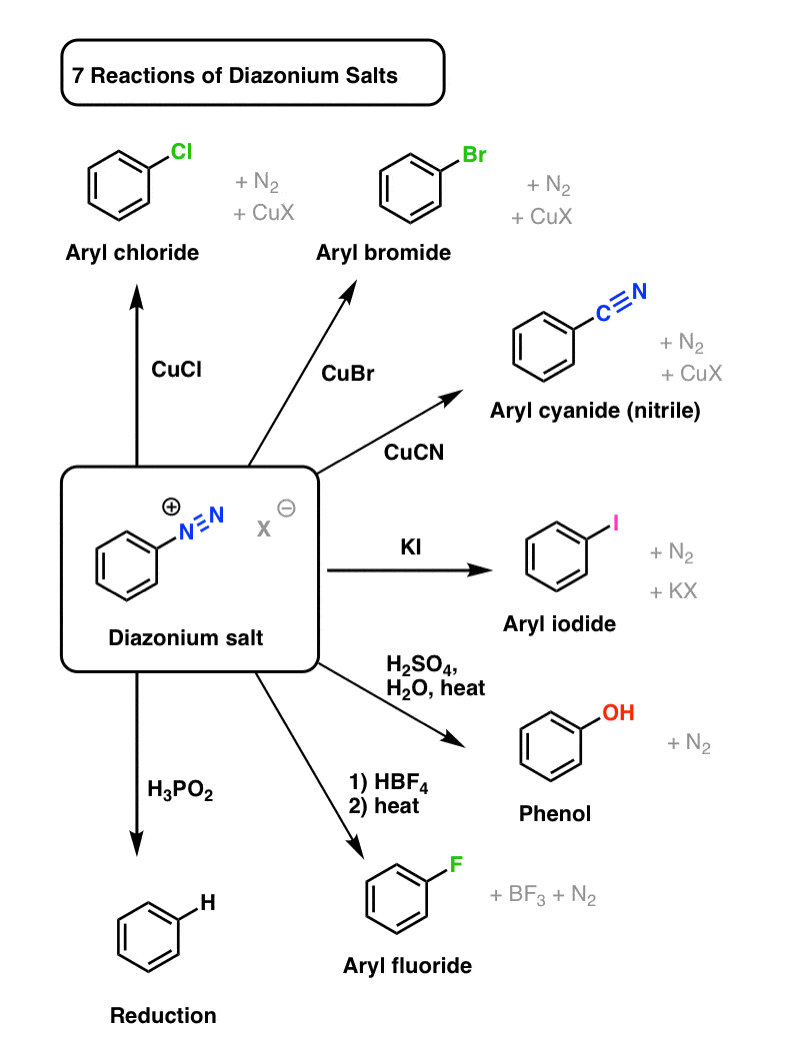
Any process featuring a single starting material that can be transformed into seven different potential products can be reasonably described as “versatile”.
These reactions can be roughly divided into two categories: Sandmeyer reactions, and everything else.
Sandmeyer Reactions
One way to transform diazonium salts is by treating them with various compounds of copper. These are known as Sandmeyer reactions, after Traugott Sandmeyer who first discovered the reaction in 1884 (with copper acetylide!).
Three key examples are:
  • CuCl transforms aryl diazonium salts into aryl chlorides
  • CuBr transforms aryl diazonium salts into aryl bromides
  • CuCN transforms aryl diazonium salts into aryl cyanides (nitriles).
The mechanism, which you can read about elsewhere, likely proceeds through an aryl radical, which is oxidized to an aryl cation and then attacked by a nucleophile.
Other Reactions
Copper isn’t necessary for substitution to occur if a strong enough nucleophile is present, or if the mixture is heated enough:
  • Aryl iodides can also be obtained from aryl diazonium salts, through treatment with potassium iodide (KI).
  • Hydroxyl groups (OH) can be installed on an aryl diazonium salt through heating with water and acid. (we’ve previously seen one example in John Roberts’ work on arynes, which we covered here. )
  • Aryl fluorides can be installed through a two step process. The first involves exchanging the counterion (X) on the aryl diazonium salt with the tetrafluoroborate (BF4) ion by treating the diazonium salt with HBF4. Then, when heated, fluorine can act as a nucleophile, displacing N2 and releasing BF3 as a byproduct.
  • The diazonium salt can also be reduced to C–H, by treating the aryl diazonium salt with hypophosphorous acid (H3PO2).
Not so bad from a single functional group!

Mechanism: Formation of Diazonium Ions

  1. Formation of nitrosonium ion from HNO2
Now let’s dig into how some of these reactions work.
First, let’s go through formation of the diazonium salt, a process called “diazotization”.
The first key reagent for this process is either sodium nitrite (NaNO2) or nitrous acid (HNO2).   Sodium nitrite has the advantage of being  an easily handled salt, while HNOis a somewhat unstable liquid.
The second key reagent is a strong mineral acid like HCl; if NaNO2 is used, HCl converts it into HNO2.
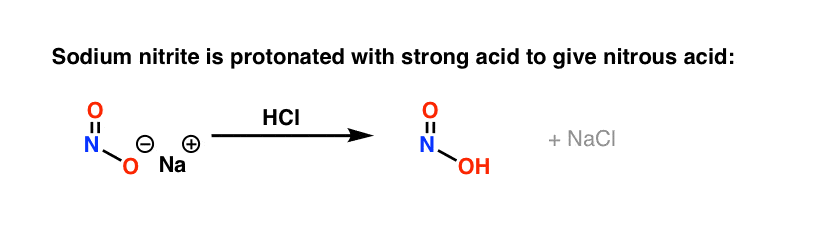
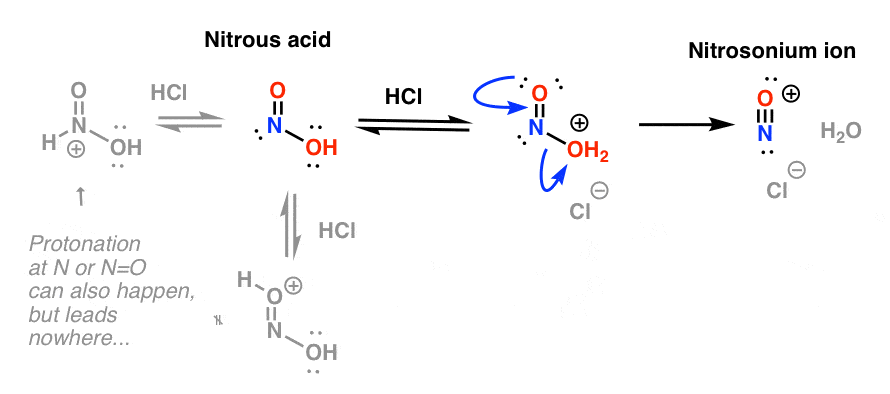
The key purpose of HCl is to further convert HNO2 into the powerful electrophile NO+, the “nitrosonium ion“, which is the key electrophile in the reaction that forms the diazonium salt.
The nitrosonium ion is formed through protonation of OH and resultant loss of water:
2. Formation of the diazonium ion
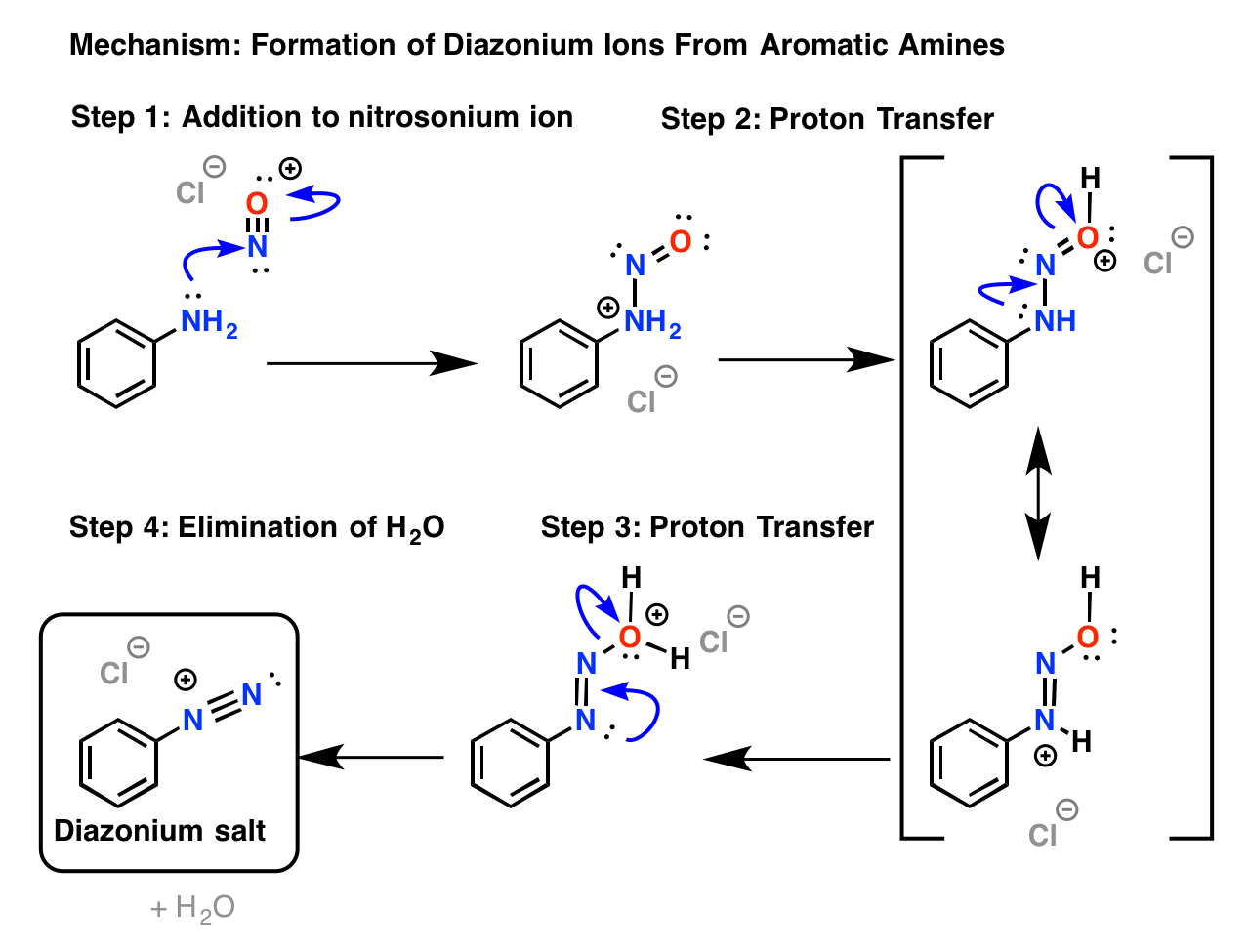
The next step is formation of the diazonium ion from the reaction between the amine and the nitrosonium ion, which also requires acid.
How does it work?
The first step is formation of a new N–N bond, which occurs through attack of the nitrosonium ion by the aromatic amine (Step 1). This is followed by two proton transfers from nitrogen to oxygen (Steps 2 and 3) accompanied by reorganization of the pi bonding framework [forming N–N (pi), breaking N–O (pi) ]. The final step is formation of the nitrogen-nitrogen triple bond accompanied by expulsion of water (Step 4).
Being fairly unstable (and potentially explosive), diazonium salts are typically not isolated (it’s relatively safe to handle the tetrafluoroborate salts as solids, but that’s about it). Once formed, they’re usually treated immediately with the appropriate reagent en route to the desired product.
Bonus Reaction: Diazo Coupling
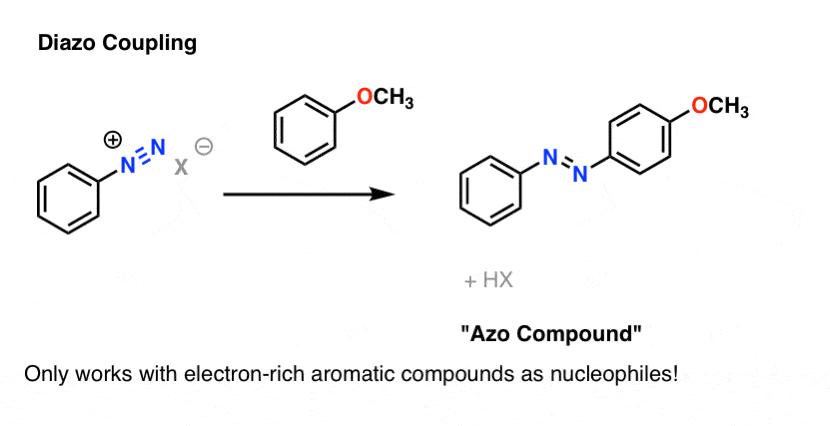
There’s one last reaction of diazonium salts which is worth mentioning. A surprising number of dyes in our daily experience are derivatives of diazobenzene, the essential structure of which is two benzene molecules joined by a nitrogen-nitrogen double bond. See this article on azo dyes, for instance. Yellow, red, and orange are common colors of azo dyes.
Azo dyes are made through the reaction of an electron-rich aromatic partner with a diazonium salt. Only electron-rich aromatic species are good enough nucleophiles to attack diazonium salts.
Factor affected on basicity of amine

Factors That Affect Basicity of Amines

by NAND KISHOR GUPTA
From  may recall that  any factor which makes a molecule’s conjugate base more stable will increase its acidity.   [Remember Le Chatelier? If you make the product more stable, you’ll favor the equilibrium going to the right].
What each of the “factors that increase acidity” have in common is that they tend to stabilize negative charge, either through inductive effects, delocalization through resonance, or by bringing the charge closer to the nucleus.
Since acidity and basicity are opposite sides of the same coin, the key factors which affect acidity also affect the basicity of amines. So evaluating basicity involves taking those same concepts but working in the opposite direction.
Generally speaking, the more unstable an electron pair is, the more basic it is. So using the same principles we outlined above, one could increase basicity by removing inductive effects, removing delocalization through resonance, or bringing the charge farther away from the nucleus.
Let’s examine the key factors in turn and apply them to obtain some key trends for the basicity of amines.

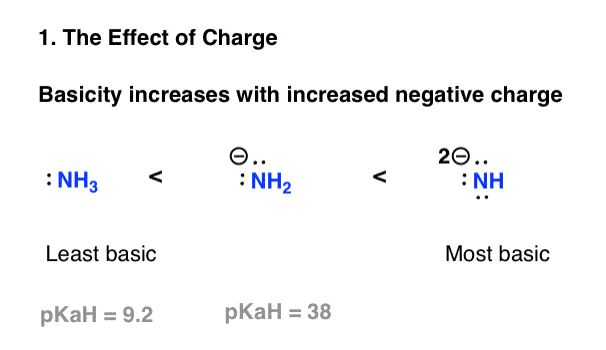
Factor #1: Basicity Increases With Increasing Negative Charge On Nitrogen

This is possibly the simplest factor to evaluate. If “basicity” can roughly be translated as “electron-pair instability”, and instability increases with charge density, then basicity should increase with increased negative charge.
A simpler way to put it: the conjugate base of an amine will always be a stronger base than the amine itself.
Compare ammonia, (NH3) with its conjugate base, the amide anion NH2(-). The amide anion is stronger base by far (pKaH of 38, versus pKaH of 9). It can be used to deprotonate terminal alkynes (pKa = 25), for example, whereas ammonia will not.
Continuing this trend, the conjugate base of the amide ion, the amide dianion NH(2-) should be an even stronger base, but it seems to be prohibitively difficult to make.   (I’m unaware of a practical application, but would welcome any enlightening comments! ). 

Factor #2: “Resonance”, or, Conjugated vs. Non-Conjugated Amines 

This relationship between lower charge densities giving rise to lower basicity also applies to lone pairs that can be delocalized into a larger pi system through resonance.
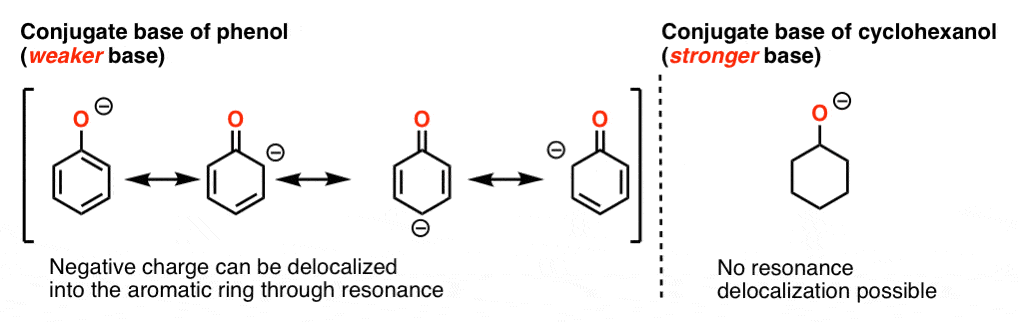
You may recall that  phenol (pKa = 10) is a much stronger stronger acid than cyclohexanol (pKa = 16).
Since, “the stronger the acid, the weaker the conjugate base”, this is equivalent to saying that the conjugate base of phenol is a weaker base than the conjugate base of cyclohexanol.
Why? We saw earlier that this is true because the conjugate base of phenol can be stabilized through resonance whereas the conjugate base of cyclohexanol cannot.
 The oxygen in phenol is part of a larger “pi system”, and the electron density can be distributed throughout the aromatic ring via resonance. (Remember: lower charge density = more stability).
Let’s apply this to amines.
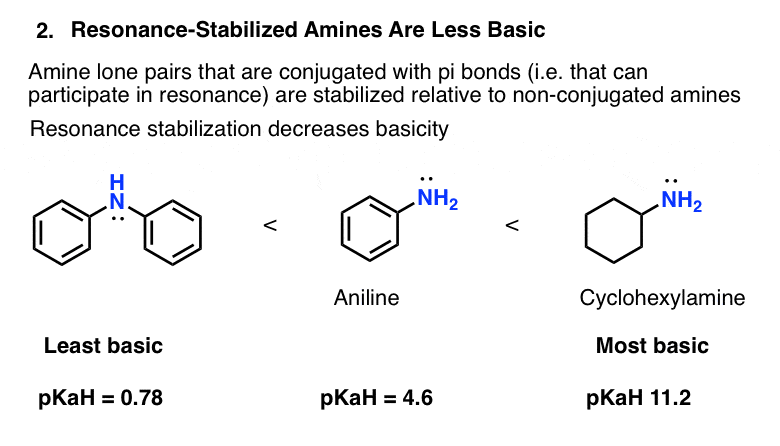
By analogy, we should also expect that aminobenzene (“aniline”) is a weaker base than cyclohexylamine.
That is indeed the case! The the pKaH of aniline is 4.6, and pKaH of  cyclohexylamine is 11.2. (The higher the pKaH, the stronger the base).
The basicity is decreased even further when a second phenyl ring is attached to the nitrogen (pKaH = 0.78).
The bottom line here is that all else being equal, a conjugated amine will be less basic than a non-conjugated amine.

Factor #3. Inductive Effects Decrease Basicity

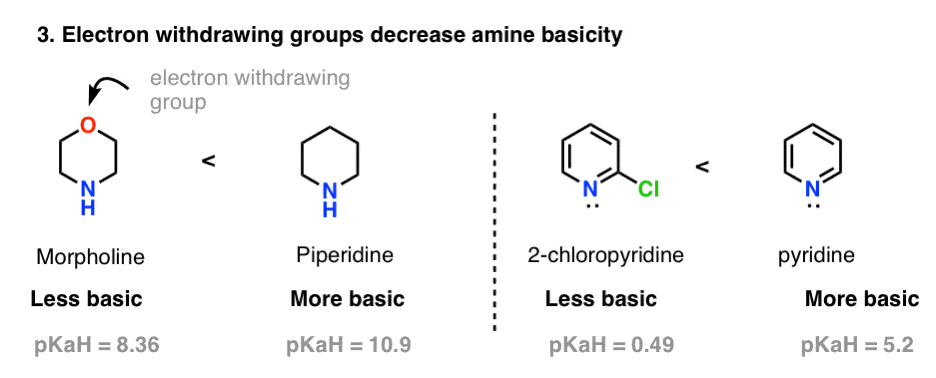
You may recall that electron withdrawing atoms (e.g. F or Cl) or functional groups (e.g. NO2) tend to increase acidity, by slurping away electron density from the conjugate base. Trifluoroethanol (pKa = 12.5)  for example, is far more acidic than ethanol itself (pKa = 16).  Lower charge density = more stability = lower basicity. 
Hence, we’d expect that electron withdrawing groups on amines should likewise decrease their basicity. And they do! Witness morpholine (pKaH = 8.36) compared to piperidine (pKaH = 11), or 2-chloropyridine (pKaH = 0.49) versus pyridine (pKaH = 5.2).

Factor #4: Pi-Acceptors and Pi-Donors

We’ve seen that resonance tends to decrease basicity (Factor 2) and so do inductive effects (Factor 3).
That said, how do you explain why amides are significantly less basic than amines? Is it resonance? Is it inductive effects? Is it both?
It seems worthwhile to devote a section to how the basicity of nitrogen is affected by its interactions with other functional groups in a pi-system.
Specifically, the basicity of nitrogen is decreased when it acts as a pi-donor, and the basicity of nitrogen is increased when it acts as a pi-acceptor.

Nitrogen Is Less Basic When It Is A Pi-Donor

Back to our amide example. Why is it less basic?
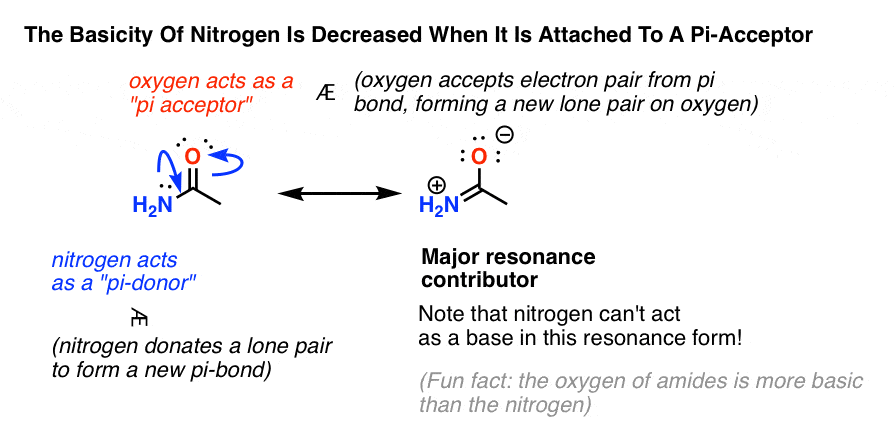
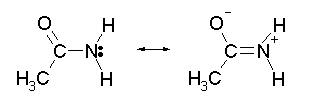
The first factor is that an electron-withdrawing oxygen is present, which can remove some of the electron density from nitrogen. However, this is outweighed by the fact that there is a significant resonance form where the nitrogen lone pair forms a new pi bond with carbon (we call this, “pi-donation“) resulting in a pair of electrons moving from the C-O pi bond to the oxygen (we call this acting as a “pi acceptor“).
Look at that resonance form on the right. The nitrogen doesn’t have a lone pair anymore, and therefore it cannot act as a base. 
Therefore, the basicity of a nitrogen is decreased when attached to a pi-acceptor. 
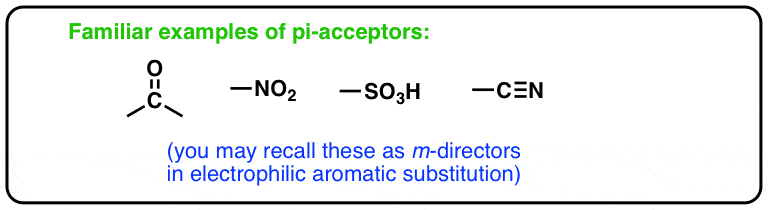
What are pi-acceptors, again? If you’ve covered electrophilic aromatic substitution, these functional groups should seem familiar.  You might recognize that “Pi acceptors” all belong in the category of  “meta- directors” .
[CF3 is an example of a functional group that is a meta director but not a pi acceptor, since it has no pi bonds]

Nitrogen As A Pi-Acceptor

You might rightly ask if this can work in the opposite direction.
Can the basicity of a nitrogen be increased when it is attached to a pi-donor? Absolutely.
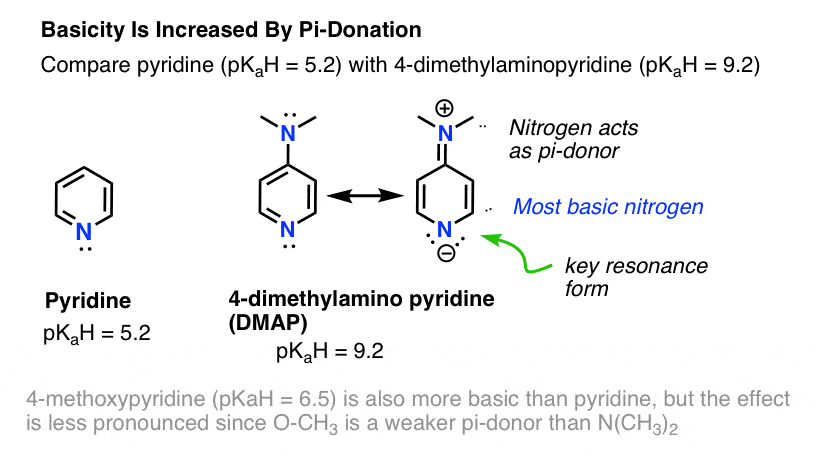
A great comparison is pyridine (pKaH = 5.2) and 4-dimethylamino pyridine (DMAP). Attachment of the strongly pi-d0nating NMe2group to the 4-position results in a 104increase in basicity of the ring nitrogen (pKaH = 9.2). Examining the resonance forms of DMAP is illuminating. In the key resonance form, the nitrogen in the ring bears a negative charge.
The ring nitrogen of DMAP is the most basic nitrogen, not the NMe2! The NMe2 is made less basic by being a pi-donor (see above) but the pyridine nitrogen is made more basic because it is the pi-acceptor here.
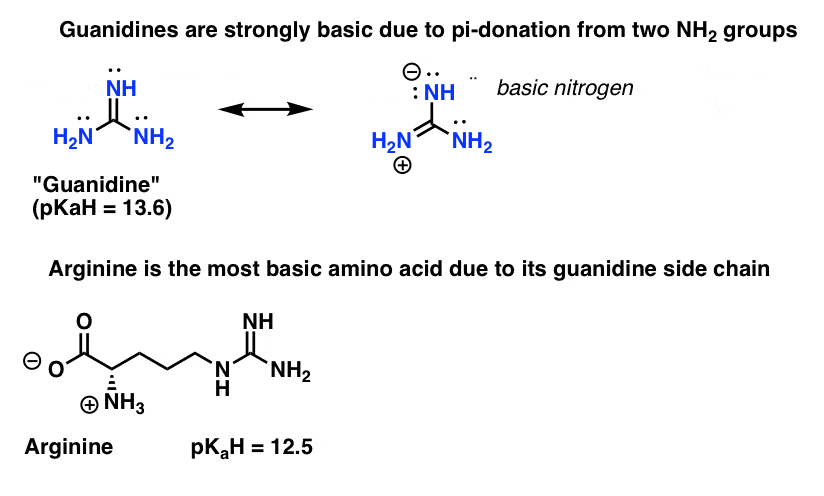
Another example of how basicity of nitrogen can be increased by attachment to pi-donors is found in guanidines.  In guanidine there are two pi-donating NH2 groups which can donate electron density to the (pi-accepting) C=NH.
Those of you who have studied some biochemistry might recall that arginine is the most basic of all the 20 essential amino acids (pKaH = 12.5).

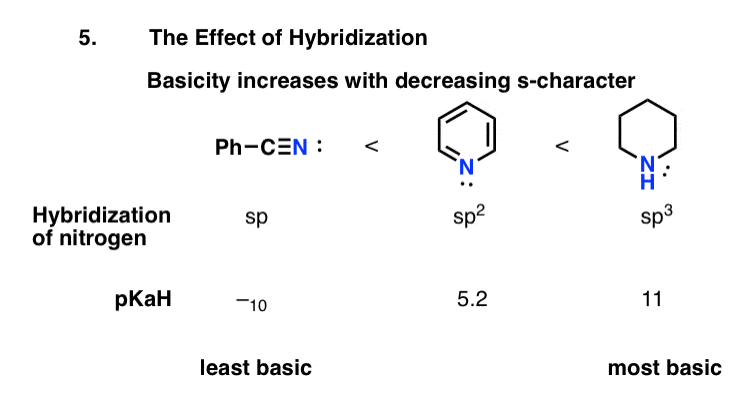
Factor #5 . Hybridization 

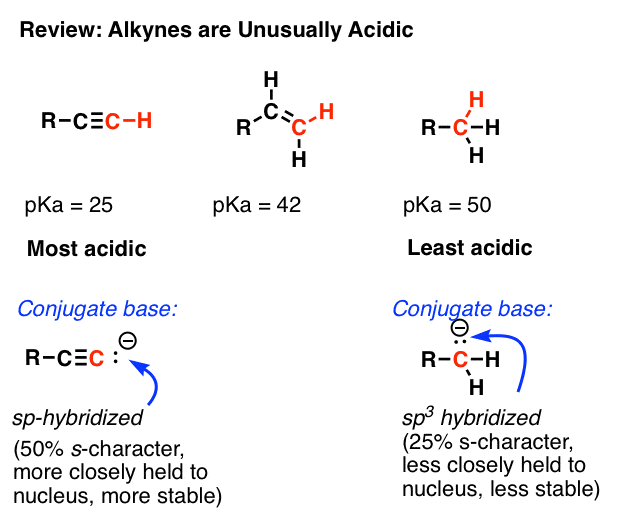
One of the more remarkable acidity trends is that alkynes are unusually acidic (pKa = 25) relative to alkenes (pKa’s around 43) and alkanes (pKa’s >50).
You might recall that our explanation for this effect was that the sp-hybridized orbitals of alkynes bear 50% s-character, and as the 2sorbital is closer to the nucleus than the 2porbitals, the resulting lone pair of the conjugate base “feels” more of the positive charge from the nucleus than would a lone pair in an sp3 hybridized orbital (25% s-character). It’s similar to why a lone pair is more stable on a more electronegative atom like fluorine than on a less electronegative atom like carbon.
Knowing this, how would you predict the relative basicity of nitriles, pyridine, and piperidine?
By analogy to alkynes, we’d expect the lone pairs in sp-hybridized nitriles to be the most stable and hence the least basic. We’d therefore expect the lone pairs in sp3-hybridized amines to be the least stable and hence the most basic.
This is borne out by pKaH values. The pKaH of benzonitrile (pKaH = –10) indicates that nitriles are very weak bases indeed. We can likewise explain the lower basicity of pyridine (pKaH = 5.2) versus piperidine (pKaH = 11) by the orbital hybridization.
(Not resonance, by the way! The lone pair in pyridine is in the plane of the ring, and thus not in conjugation with the p-orbitals). 

Bonus Factor: Aromaticity

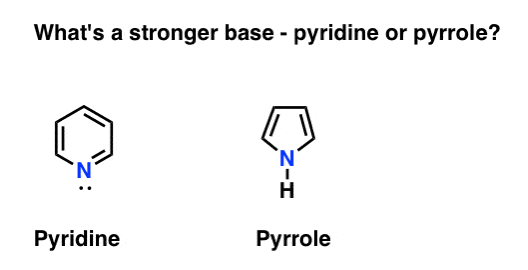
Classic exam question. What’s more basic, pyridine or pyrrole? 
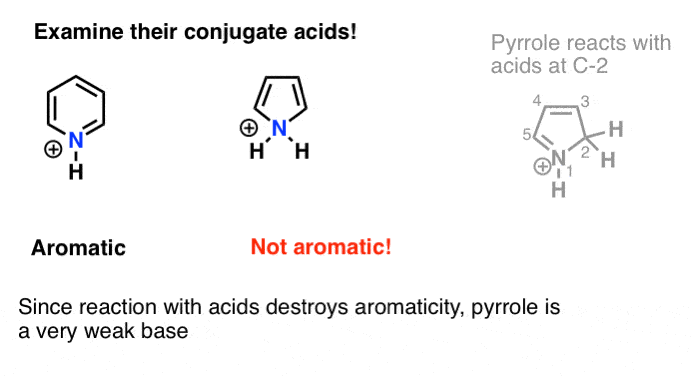
It turns out that the nitrogen in pyrrole is unusually non-basic. In fact, even when subjected to acid, pyrrole reacts at carbon (C-2), and not on the nitrogen. Pyridine [pKaH = 5.2] is far more basic than pyrrole [pKaH about –3.6 ]
Why?
Draw the conjugate acid of pyrrole. Notice anything?
The conjugate acid is not aromatic.  Removal of the lone pair on nitrogen through protonation would destroy the conjugation of the lone pair with the other p orbitals of the ring and render the molecule non aromatic.
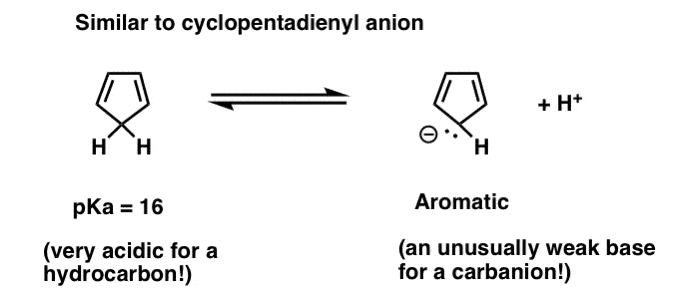
This might ring a distant bell. You might remember that cyclopentadiene is an unusually strong acid for a hydrocarbon. We can restate this as “the conjugate base of cyclopentadiene is unusually weak”.
See the analogy with pyrrole? Protonation of the cyclopentadienyl anion destroys aromaticity.
The bottom line here is to be on the lookout for situations where forming a new N-H bond might disrupt aromaticity. [Note 2]
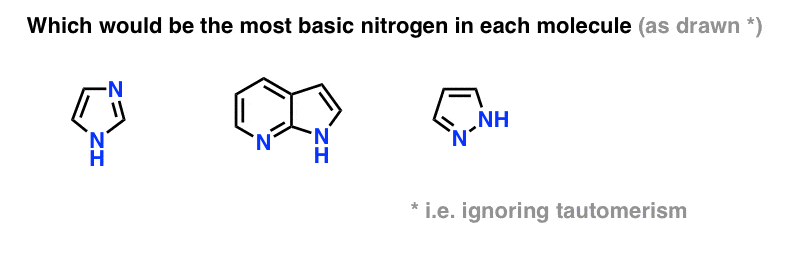
Can you apply the same concept in the question below?

Conclusion

OK, I said there were 5 factors which affected acidity, but I covered six factors here. The reason is that “pi donation” and “pi accepting” behaviour often doesn’t get covered that much in Org 1 (when acidity is introduced) but by the time most students encounter amines, they’ve encountered these concepts in the context of electrophilic aromatic substitution.
The key lesson for today is this: since “the stronger the acid, the weaker the conjugate base” and “the weaker the acid, the stronger the conjugate base”, every factor that affects acidity is likewise a factor that affects basicity.
If you understand the factors that stabilize negative charge (and therefore make an atom less basic), by definition you also understand the factors that destabilize negative charge (and therefore make an atom more basic).
How do we handle situations where multiple factors come into play? We must resort to experimental measurement (pKaH). It’s too difficult to predict trends when more than one variable is being changed at once.

Basicity of Amine

OBJECTIVES
After completing this section, you should be able to
  1. account for the basicity and nucleophilicity of amines.
  2. explain why amines are more basic than amides, and better nucleophiles.
  3. describe how an amine can be extracted from a mixture that also contains neutral compounds illustrating the reactions which take place with appropriate equations.
  4. explain why primary and secondary (but not tertiary) amines may be regarded as very weak acids, and illustrate the synthetic usefulness of the strong bases that can be formed from these weak acids.
KEY TERMS
Make certain that you can define, and use in context, the key term below.
  • amide
STUDY NOTES
The lone pair of electrons on the nitrogen atom of amines makes these compounds not only basic, but also good nucleophiles. Indeed, we have seen in past chapters that amines react with electrophiles in several polar reactions (see for example the nucleophilic addition of amines in the formation of imines and enamines in Section 19.8).
The ammonium ions of most simple aliphatic amines have a pKa of about 10 or 11. However, these simple amines are all more basic (i.e., have a higher pKa) than ammonia. Why? Remember that, relative to hydrogen, alkyl groups are electron releasing, and that the presence of an electron‑releasing group stabilizes ions carrying a positive charge. Thus, the free energy difference between an alkylamine and an alkylammonium ion is less than the free energy difference between ammonia and an ammonium ion; consequently, an alkylamine is more easily protonated than ammonia, and therefore the former has a higher pKa than the latter.

Basicity of nitrogen groups

In this section we consider the relative basicity of several nitrogen-containing functional groups: amines, amides, anilines, imines, and nitriles. When evaluating the basicity of a nitrogen-containing organic functional group, the central question we need to ask ourselves is: how reactive (and thus how basic) is the lone pair on the nitrogen? In other words, how much does that lone pair want to break away from the nitrogen nucleus and form a new bond with a hydrogen?
image088.png

Comparing the basicity of alkyl amines to ammonia

Because alkyl groups donate electrons to the more electronegative nitrogen. The inductive effect makes the electron density on the alkylamine's nitrogen greater than the nitrogen of ammonium. Correspondingly, primary, secondary, and tertiary alkyl amines are more basic than ammonia. 

Comparing the basicity of alkylamines to amides

With an alkyl amine the lone pair electron is localized on the nitrogen. However, the lone pair electron on an amide are delocalized between the nitrogen and the oxygen through resonance. This makes amides much less basic compared to alkylamines.
In fact,when and amide is reacted with an acid, the protonation occurs at the carbonyl oxygen and not the nitrogen. This is because the cation resulting from oxygen protonation is resonance stabilized. The cation resulting for the protonation of nitrogen is not resonance stabilized. 

Basicity of heterocyclic amines

When a nitrogen atom is incorporated directly into an aromatic ring, its basicity depends on the bonding context. In a pyridine ring, for example, the nitrogen lone pair occupies an sp2-hybrid orbital, and is not part of the aromatic sextet - it is essentially an imine nitrogen. Its electron pair is available for forming a bond to a proton, and thus the pyridine nitrogen atom is somewhat basic.
image098.png
In a pyrrole ring, in contrast, the nitrogen lone pair ispart of the aromatic sextet. This means that these electrons are very stable right where they are (in the aromatic system), and are much less available for bonding to a proton (and if they do pick up a proton, the aromic system is destroyed). For these reasons, pyrrole nitrogens are not strongly basic.
image100.png
The aniline, pyridine, and pyrrole examples are good models for predicting the reactivity of nitrogen atoms in more complex ring systems (a huge diversity of which are found in nature). The tryptophan side chain, for example, contains a non-basic 'pyrrole-like' nitrogen, while adenine (a DNA/RNA base) contains all three types.
image102.png
The lone pair electrons on the nitrogen of a nitrile are contained in a sp hybrid orbital. The 50% character of an sp hybrid orbital means that the electrons are close to the nucleus and therefore not significantly basic.
A review of basic acid-base concepts should be helpful to the following discussion. Like ammonia, most amines are Brønsted and Lewis bases, but their base strength can be changed enormously by substituents. It is common to compare basicity's quantitatively by using the pKa's of their conjugate acids rather than their pKb's. Since pKa + pKb = 14, the higher the pKathe stronger the base, in contrast to the usual inverse relationship of pKa with acidity. Most simple alkyl amines have pKa's in the range 9.5 to 11.0, and their water solutions are basic (have a pH of 11 to 12, depending on concentration). The first four compounds in the following table, including ammonia, fall into that category.
The last five compounds (colored cells) are significantly weaker bases as a consequence of three factors. The first of these is the hybridization of the nitrogen. In pyridine the nitrogen is sp2 hybridized, and in nitriles (last entry) an sp hybrid nitrogen is part of the triple bond. In each of these compounds (shaded red) the non-bonding electron pair is localized on the nitrogen atom, but increasing s-character brings it closer to the nitrogen nucleus, reducing its tendency to bond to a proton.
Compound
NH3CH3C≡N
pKa11.010.710.79.35.24.61.00.0-1.0-10.
Finally, the very low basicity of pyrrole (shaded blue) reflects the exceptional delocalization of the nitrogen electron pair associated with its incorporation in an aromatic ring. Indole (pKa = -2) and imidazole (pKa = 7.0), see above, also have similar heterocyclic aromatic rings. Imidazole is over a million times more basic than pyrrole because the sp2 nitrogen that is part of one double bond is structurally similar to pyridine, and has a comparable basicity.
Although resonance delocalization generally reduces the basicity of amines, a dramatic example of the reverse effect is found in the compound guanidine (pKa = 13.6). Here, as shown below, resonance stabilization of the base is small, due to charge separation, while the conjugate acid is stabilized strongly by charge delocalization. Consequently, aqueous solutions of guanidine are nearly as basic as are solutions of sodium hydroxide.

guandine.gif
The relationship of amine basicity to the acidity of the corresponding conjugate acids may be summarized in a fashion analogous to that noted earlier for acids:
Strong bases have weak conjugate acids, and weak bases have strong conjugate acids.

Amine Extraction in the Laboratory

Extraction is often employed in organic chemistry to purify compounds. Liquid-liquid extractions take advantage of the difference in solubility of a substance in two immiscible liquids (e.g. ether and water). The two immiscible liquids used in an extraction process are (1) the solvent in which the solids are dissolved, and (2) the extracting solvent. The two immiscible liquids are then easily separated using a separatory funnel. For amines one can take advantage of their basicity by forming the protonated salt (RNH2+Cl), which is soluble in water. The salt will extract into the aqueous phase leaving behind neutral compounds in the non-aqueous phase. The aqueous layer is then treated with a base (NaOH) to regenerate the amine and NaCl. A second extraction-separation is then done to isolate the amine in the non-aqueous layer and leave behind NaCl in the aqueous layer.

Acidity of Amines

We normally think of amines as bases, but it must be remembered that 1º and 2º-amines (not 3º-amines which have no N-H protons) are also very weak acids (ammonia has a pKa = 34). In this respect it should be noted that pKa is being used as a measure of the acidity of the amine itself rather than its conjugate acid, as in the previous section. For ammonia this is expressed by the following hypothetical equation:
NH3 + H2____> NH2(–) + H2O-H(+)
The same factors that decreased the basicity of amines increase their acidity. This is illustrated by the following examples, which are shown in order of increasing acidity. It should be noted that the first four examples have the same order and degree of increased acidity as they exhibited decreased basicity in the previous table. The first compound is a typical 2º-amine, and the three next to it are characterized by varying degrees of nitrogen electron pair delocalization. The last two compounds (shaded blue) show the influence of adjacent sulfonyl and carbonyl groups on N-H acidity. From previous discussion it should be clear that the basicity of these nitrogens is correspondingly reduced.
CompoundC6H5SO2NH2
pKa33271915109.6
The acids shown here may be converted to their conjugate bases by reaction with bases derived from weaker acids (stronger bases). Three examples of such reactions are shown below, with the acidic hydrogen colored red in each case. For complete conversion to the conjugate base, as shown, a reagent base roughly a million times stronger is required.
C6H5SO2NH2 + KOH  C6H5SO2NH(–) K(+) + H2Oa sulfonamide base
(CH3)3COH + NaH  (CH3)3CO(–) Na(+) + H2an alkoxide base
(C2H5)2NH + C4H9Li  (C2H5)2N(–) Li(+) + C4H10an amide base

Important Reagent Bases

The significance of all these acid-base relationships to practical organic chemistry lies in the need for organic bases of varying strength, as reagents tailored to the requirements of specific reactions. The common base sodium hydroxide is not soluble in many organic solvents, and is therefore not widely used as a reagent in organic reactions. Most base reagents are alkoxide salts, amines or amide salts. Since alcohols are much stronger acids than amines, their conjugate bases are weaker than amide bases, and fill the gap in base strength between amines and amide salts. In the following table, pKa again refers to the conjugate acid of the base drawn above it.
Base NamePyridineTriethyl
Amine
Hünig's BaseBarton's
Base
Potassium
t-Butoxide
Sodium HMDSLDA
Formula(C2H5)3N(CH3)3CO(–) K(+)[(CH3)3Si]2N(–) Na(+)[(CH3)2CH]2N(–) Li(+)
pKa5.310.711.414192635.7
Pyridine is commonly used as an acid scavenger in reactions that produce mineral acid co-products. Its basicity and nucleophilicity may be modified by steric hindrance, as in the case of 2,6-dimethylpyridine (pKa=6.7), or resonance stabilization, as in the case of 4-dimethylaminopyridine (pKa=9.7). Hünig's base is relatively non-nucleophilic (due to steric hindrance), and like DBU is often used as the base in E2 elimination reactions conducted in non-polar solvents. Barton's base is a strong, poorly-nucleophilic, neutral base that serves in cases where electrophilic substitution of DBU or other amine bases is a problem. The alkoxides are stronger bases that are often used in the corresponding alcohol as solvent, or for greater reactivity in DMSO. Finally, the two amide bases see widespread use in generating enolate bases from carbonyl compounds and other weak carbon acids.

Exercises

Questions

Q24.3.1
Select the more basic amine from each of the following pairs of compounds.
(a)
(b)
(c)

Q24.3.2
The 4-methylbenzylammonium ion has a pKa of 9.51, and the butylammonium ion has a pKa of 10.59. Which is more basic? What's the pKb for each compound?

Solutions

S24.3.1
(a)
(b)
(c)

S24.3.2
The butylammonium is more basic. The pKb for butylammonium is 3.41, the pKb for 4-methylbenzylammonium is 4.49.

Contributors

  • Mr. Nand Kishor Gupta

Trading Books